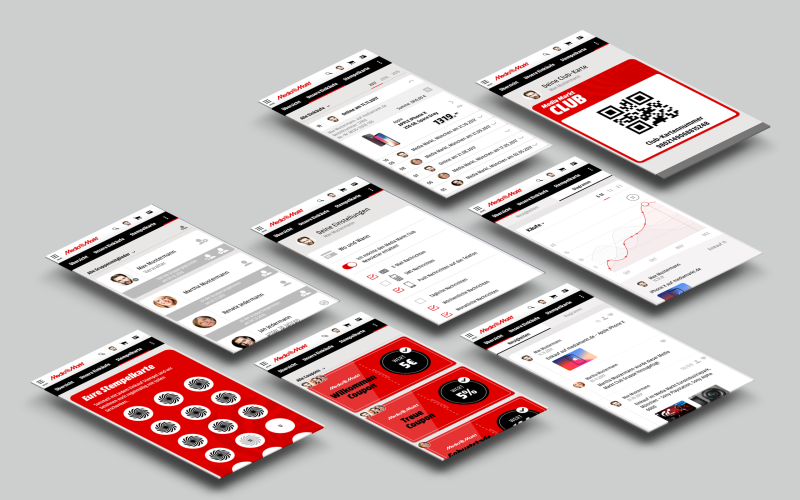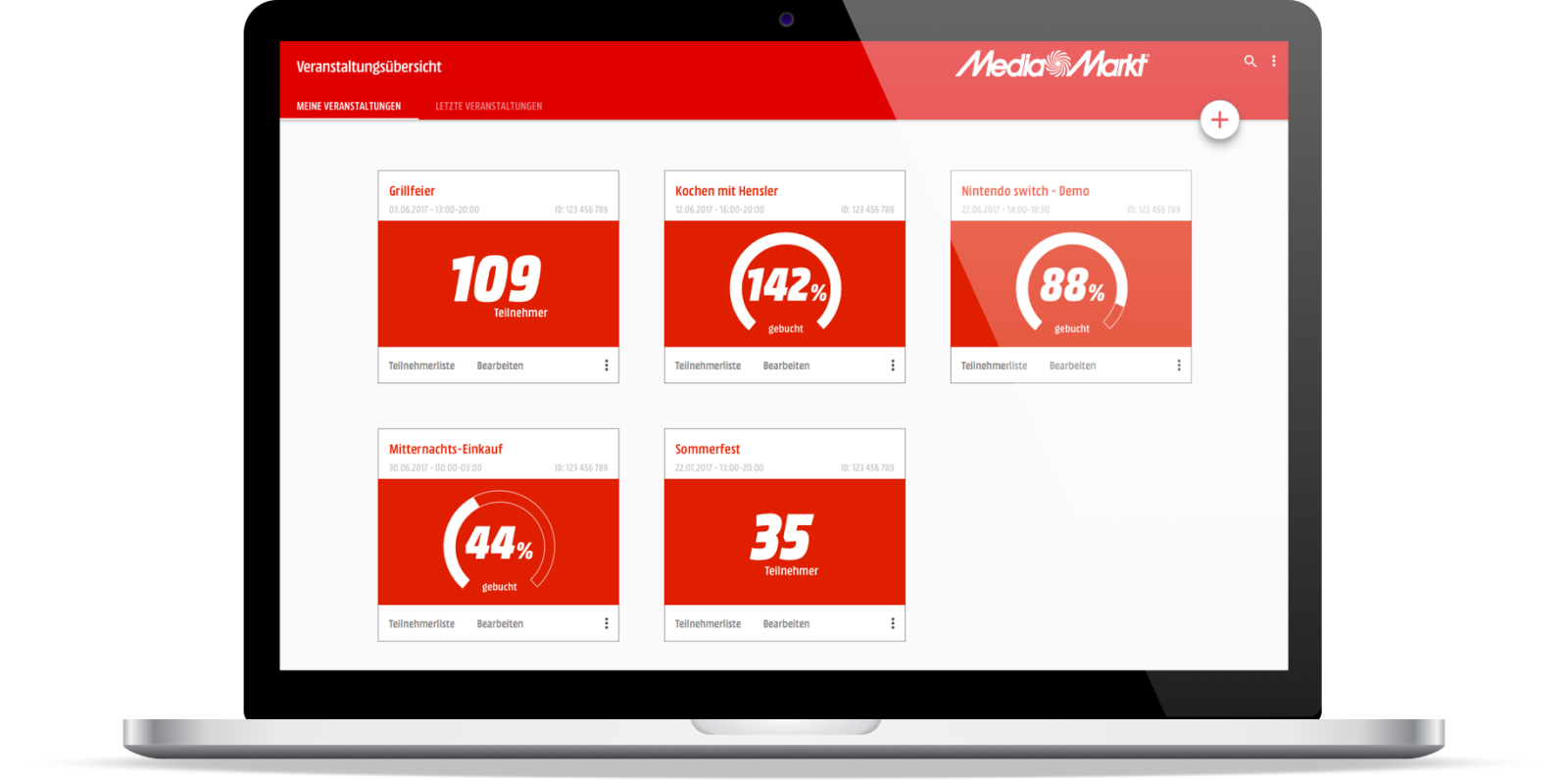
A store manager is not a software person. He runs an electronics market, and if he wants to offer his regulars a barbecue, a film premiere or a photography workshop, it must not cost him half an hour.
That was where the task hung. Hundreds of stores were to create, publish, cancel and manage events independently of one another — and behind that sat a system that had to do considerably more than it looks: send invitations in waves, following rules such as if fewer than Y registrations by day X, then send to a further Z customers. Maintain waiting lists on which everyone sees their position. Keep roles and permissions apart. Scan tickets, collect feedback, connect to four adjacent systems. And all of it built so it would later work for product reservations too.
Our task was the usual one: validate, test, and derive a recommendation and a project plan from it. I worked on the structure, on the screen maps, and on the places where it is decided whether a tool like this is usable at all — registration, sign-up, the question of how a list must be sorted for people to find what they are looking for.
What followed was unusual. After approval it was not handed over but built — with a development team in Cluj-Napoca. Two and a half months later it was live.
For a system with decentralised administration, invitation logic and four interfaces, that is fast. It was possible because what was needed had been validated beforehand — and because nothing stood between concept and implementation any more.
MediaMarktSaturn · shipped
When the store invites for itself
Vera was a platform on which individual stores could manage the events they planned in-house: inviting customers, handling acceptances and cancellations, controlling event-related group emails. Given its manageable scope it went straight into realization, built with the Cluj dev team.